
In Japan, a naturalization takes effect on the day the official gazette announces it. According to the Ministry of Justice, the notice gives the person’s name before naturalization, their date of birth, and their municipality of residence.
Most countries with citizenship by investment (CBI) programs publish no names of new citizens. Grenada and Vanuatu removed disclosure duties from their laws, and Saint Lucia’s law requires names that its government has left out since 2019.
If privacy is one reason you want a second citizenship, the law of each country decides whether your name becomes public. Practice does not always follow that law.
Where parliament grants citizenship by name
In Belgium, Denmark, and Iceland, parliament can grant citizenship by passing a law that names each new citizen.
Belgium’s Moniteur belge, the official gazette, printed a naturalization law in 2024 that gave each person’s full name, place of birth, and date of birth.

Denmark grants citizenship through an act of parliament. The 2024 act lists every new citizen by name, next to the municipality where that person lives.
Iceland’s parliament uses the same method. Its 2022 law on the granting of citizenship lists each person with a birth year and a country of birth.

Where a gazette notice is the law
In Japan and South Korea, the nationality law requires that a government notice of each naturalization appear in the official gazette.
Article 10 of Japan’s Nationality Act states that “the Minister of Justice must provide public notice thereof in the official gazette.” Until that notice appears, the naturalization has no legal effect.
South Korea’s Nationality Act requires that the Minister of Justice announce each acquisition of Korean nationality in the Official Gazette. A presidential decree sets what the notice contains.
In Switzerland, the canton of Zurich requires that every naturalization appear in the municipality’s official publication, according to the canton’s handbook for naturalization officials. The ordinance limits the notice to the name, gender, current citizenship, and year of birth.
France publishes naturalization decrees in its official journal, the Journal officiel. Article L221-14 of France’s administrative code requires that certain individual acts about nationality appear under conditions that stop search engines from indexing them, the law firm ITLAW Avocats notes.
Malta publishes new citizens’ names, investors included
Malta’s regulations require that the names of everyone who becomes a citizen by registration or naturalization appear in the Government Gazette, according to the Maltese law firm GVZH Advocates.
The rules for Malta’s Individual Investor Program repeated that duty for investor citizens, a letter published in MaltaToday pointed out.
In late 2020, a legal notice gave the Minister for Home Affairs the power to withhold names. The ministry told IMI it would reverse that change one day after Maltese media first reported it.
Legal Notice 1 of 2021 then removed the Minister’s discretion to withhold names for security reasons, GVZH notes.
In April 2025, the EU’s Court of Justice ruled that Malta’s investor citizenship program was contrary to EU law.
Most CBI states publish no names
CBI countries generally decline to disclose who their approved applicants are, IMI noted when Grenada confirmed one investor citizen’s identity to a journalist. At the time, Philippe May, CEO of EC Holdings, told IMI that “CBI units are not supposed to reveal who obtained citizenship.”
Alex Recouso, CEO of CitizenX, argues that “countries publishing the names of those who acquire citizenship by making large contributions are putting a target on the back of their investors.”
He believes that citizenship “is a bond between an individual and a nation state and it should stay private between the parties.”
Antigua and Barbuda’s regulations require a report every six months. That report lists the nationalities of applicants and dependants, and the list of required contents includes no applicant names.
Grenada’s Citizenship by Investment Act of 2013 requires that the Minister report to Parliament every six months.
The original text required that this report give “the names, addresses and nationalities of the applicants.” The text of the act quoted in Grenada’s report to Parliament for the second half of 2024 no longer contains that clause.
Nauru’s citizenship by investment law of 2024 goes further. It bars the program office from sharing information with any third party, except for law enforcement, other official purposes, or court proceedings.
São Tomé and Príncipe’s decree of 2025 requires a quarterly report that identifies each applicant and dependant. The law sends that report to the government member responsible for justice, the Public Prosecutor’s Office, and the National Assembly, and contains no duty to publish it.
Turkey’s citizenship law requires Official Gazette publication for decisions that take citizenship away. Decisions that grant it go to the person concerned and to the office that handled the application.
Saint Lucia’s law requires names in every annual report
Section 24 of Saint Lucia’s Citizenship by Investment Act requires that the Board submit an annual report, which the Minister must lay in Parliament. The report must include “the names, addresses and nationalities of successful applicants and any qualifying dependants.”
The act contains no confidentiality clause. In 2019, the government decided, as policy, to leave names out of the reports, IMI reported this year.
Mc Claude Emmanuel, head of the Citizenship by Investment Unit (CIU), told IMI that “The Government has maintained that policy.” Parliament has never amended the section.
A fiscal publication on a Saint Lucian government website later listed more than a hundred bond-route investors by name. Emmanuel told IMI that “The CIU was not aware that this was being published.”
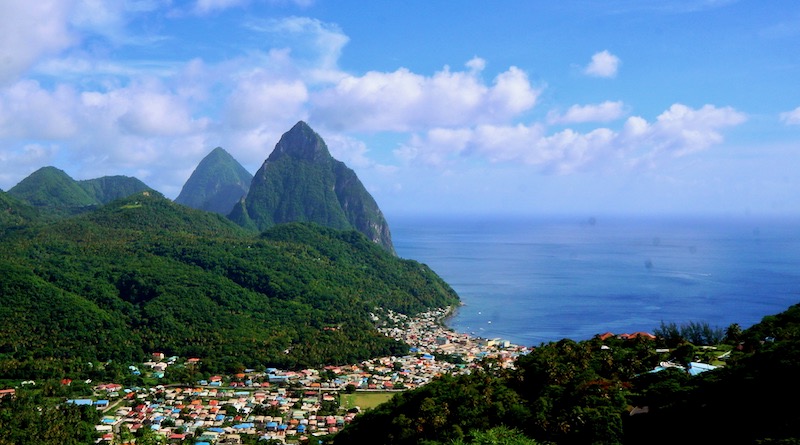
Vanuatu dropped its gazette duty
Section 21 of Vanuatu’s Citizenship Act required that the Citizenship Commission publish the names of new citizens in the Vanuatu Gazette. The deadline was “not later than 30 days after registration.”
The Citizenship (Amendment) Act No. 40 of 2014 removed that subsection, with effect from 2015. The Commission must record new citizens in a register, and the act no longer requires that it publish their names.
Journalists from The Guardian used freedom of information requests to obtain the names of more than 2,000 people approved in 2020, IMI reported.
Dominica named new citizens for years, then stopped
Dominica’s national gazettes from 2007 to 2022 name roughly 7,700 new citizens, according to an investigation by the Organized Crime and Corruption Reporting Project (OCCRP). The same investigation found that the gazettes stopped publishing the names of new citizens in March 2019.
Some CBI states name the people they revoke
Dominica’s citizenship deprivation order of 2024 lists every person by name, country of origin, and gender.
Saint Kitts and Nevis took a different approach to revocation. Its government said on April 7, 2025 that an order had revoked the citizenship of 13 individuals and their dependants, and the announcement named none of them.
The United States publishes who leaves
The United States has no citizenship by investment program and publishes no list of new citizens. The Privacy Act of 1974 covers the federal records system that stores naturalization files.
The Internal Revenue Service does publish names in the other direction. Under section 6039G of the Internal Revenue Code, each quarterly Federal Register notice lists individuals losing US citizenship, a list that IMI has covered before.
At the time of publication, the latest notice covers the quarter ending June 30, 2026.
What to check before you apply
For Recouso, whether a country publishes names is "one of the key aspects that families should look into when assessing citizenship programs."
Read the current citizenship law of the country you are considering, including every amendment. Vanuatu's gazette duty disappeared in an amendment, and Saint Lucia's survives in Section 24 of its act.
Treat confidentiality that rests on policy as a promise a future government can change. A Maltese legal notice in 2020 gave a minister the power to withhold names, until the government reversed it.
Expect that a revocation may be public. Malta's regulations cover people who lose citizenship, and Dominica named every person in its 2024 deprivation order.
Compare programs on transparency before you choose one. IMI's CBI Transparency Index found that average transparency across the programs fell from 37% to 33% between its 2022 and 2024 editions.