
10 On The Weekend is a weekly (-ish) feature in IMI, the concept of which is simple: Each time, we ask the same ten questions of a different IMI Pro, letting readers get to know the interviewee on a more personal and informal level than they might during the ordinary course of business.
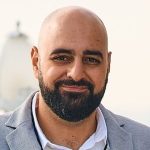
Our guest this week is Onur Sümer, Managing Partner at GSC International
How do you spend your weekends?
My weekends are primarily about family. Given the amount of traveling I do during the week, I really value being able to slow down and spend quality time with my wife and daughter.
I also enjoy good food, wine, and cigars with friends.

When possible, I like to travel; even a short change of scenery helps me disconnect from work and come back with a fresh perspective.
What are your top three business goals this year?
First, to continue expanding GSC INTERNATIONAL’s global footprint, particularly through our growing presence and partnerships in Europe, the Middle East, Canada, and Asia.
Second, to strengthen our position in investment migration and global mobility. I want us to go beyond simply processing residence or citizenship applications and become a long-term strategic legal partner to internationally mobile families, entrepreneurs, and investors.
Third, to build an organization that can grow internationally without losing the boutique character of the firm.
Personal relationships, accessibility and trust have always been central to GSC INTERNATIONAL, and I want to preserve those qualities as we expand.
What’s your biggest business concern right now?
The speed at which the regulatory environment is changing. Investment migration is becoming increasingly interconnected with compliance, banking, tax, source-of-funds scrutiny, and geopolitical considerations.
For professional firms, the challenge is not simply keeping up with those changes but anticipating them and making sure clients receive advice that remains sound across several jurisdictions.
Which book is on your nightstand right now?
La Civilisation des mœurs by Norbert Elias.
I find his exploration of how societies, behaviors, and social norms evolve over time particularly fascinating, especially when you spend your professional life working across different countries and cultures.
How and when did you first get into the investment migration industry?
It happened quite organically through my international legal practice. I started my career as a lawyer working on cross-border matters, and as our international client base developed, we increasingly found ourselves advising entrepreneurs and families whose legal needs extended beyond one country.
Investment, residence, citizenship, corporate structuring, and private-client matters naturally began to intersect.
Over time, what had initially been one component of our international practice developed into an important part of GSC INTERNATIONAL.
What fascinated me was that investment migration was never really just about obtaining a passport or residence permit. It was about understanding where a family wanted to live, invest, educate their children, conduct business, and ultimately build their future.
What was your proudest moment as a service provider?
There have been many successful cases, but the moments I value most are when a client comes back to us years after the original engagement with a completely different matter or introduces the next generation of the family to us.
For me, that is the strongest indication that we have done our job properly. A successful application is important, but earning someone’s trust to the point that you become their long-term counsel is much more meaningful.
I am also proud of seeing GSC INTERNATIONAL develop from a legal practice into an international platform capable of assisting clients across multiple jurisdictions while maintaining very personal relationships with them.
Which investment migration market development has surprised you the most in the last year?
Probably the speed with which the industry is moving away from the traditional concept of simply acquiring a “second passport.”
Clients are becoming much more sophisticated. They increasingly look at residence and citizenship as part of a broader strategy involving mobility, tax residence, asset protection, succession planning, education, and international business.
At the same time, governments, banks, and regulators are applying significantly greater scrutiny. That combination is changing the industry. In my view, it increasingly favors serious multidisciplinary professional firms rather than purely transactional migration providers.
If you could go ten years back in time, what business decision would you change?
I would have internationalized the firm faster.
We were already working internationally, but I would have invested earlier in building a more structured presence in key jurisdictions and bringing international professionals into the GSC INTERNATIONAL network.
One lesson I have learned is that international expansion takes time. Relationships, reputation, and institutional knowledge cannot be built overnight.
Starting that process even five years earlier would have created enormous compounding value.
What investment migration industry personality do you most admire?
I find it difficult to identify just one person because I admire different people for different reasons. The industry has some remarkable entrepreneurs, lawyers, and advisers who helped transform investment migration from a relatively niche activity into a genuinely international professional sector.
What I particularly admire are people who have built successful businesses while also contributing to the professionalization and credibility of the industry.
For me, longevity, integrity and intellectual independence are more impressive than simply building the largest operation.
If all goes according to plan, what will you be doing five years from now?
Hopefully, still doing much of what I am doing today but on a larger international platform and with a little more time to enjoy it.
I see GSC INTERNATIONAL becoming a truly integrated international boutique, with strong teams across several strategic jurisdictions and a particularly strong practice serving internationally mobile entrepreneurs, investors and families.
Personally, I would like to spend more of my time on strategy, relationships, and complex cross-border matters, while the next generation of our team takes greater responsibility for the day-to-day business.
And if everything really goes according to plan, I will also have learned how to protect my weekends a little better.



